
Measured. Not marketed.
A rating printed on a box tells you what an LED can do in a laboratory — not what the finished light does once the optics, the driver, the housing and the heat are in the way. So we put assembled product on the bench and publish what the meter said.
We didn't start with a price and figure out how much light we could fit inside it. We started with the output and thermal performance we wanted, then engineered the product around that.
The custom PCB, the thermal mass of the billet housing and the firmware exist to hold that output safely.
What the meter actually read
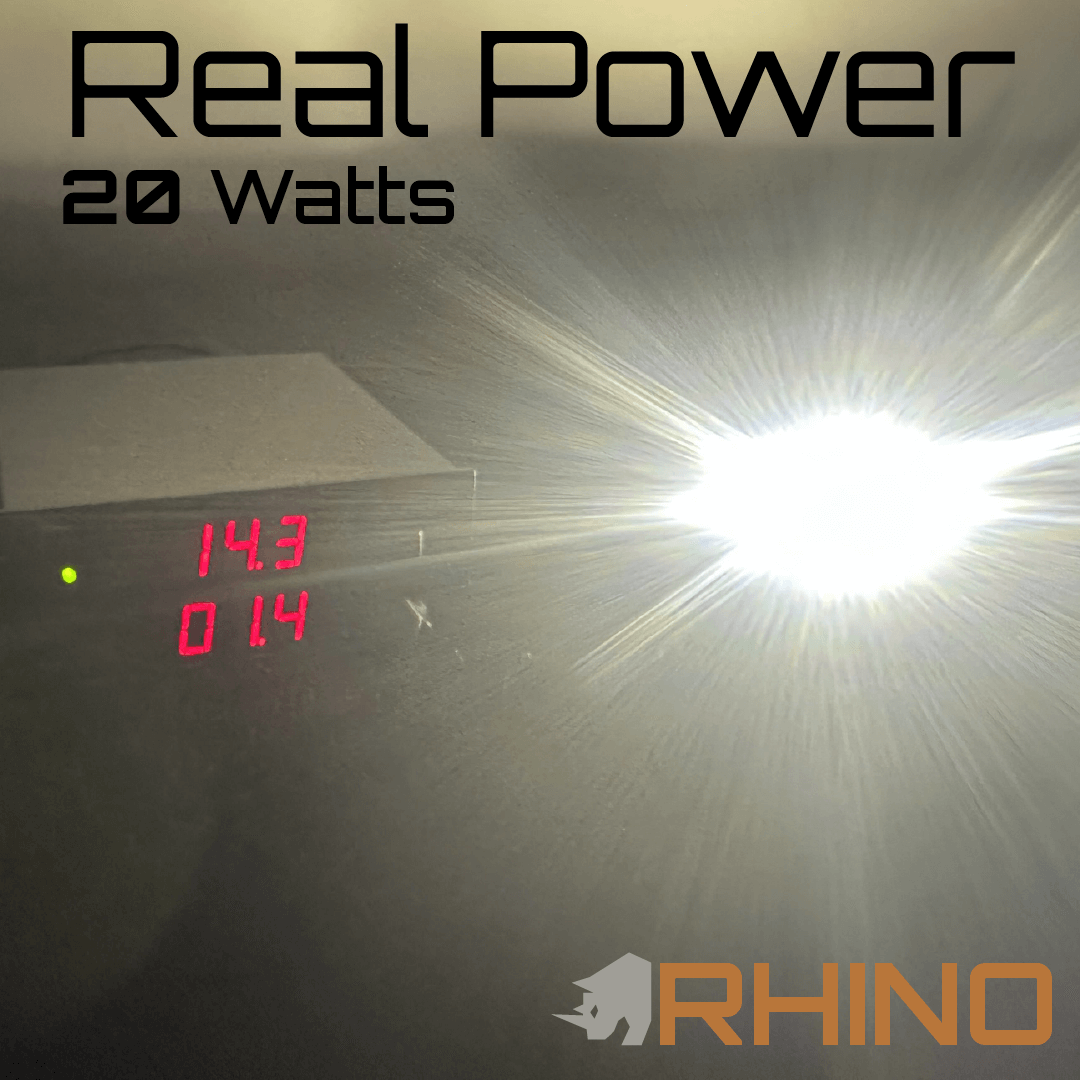
At 14.3 V, Axion drew a measured 1.4 A — approximately 20 W derived from those two readings. It out-read both of the samples we bought and put on the same meter at the same distance. We are not asserting anything about how their markings were arrived at, and two samples are not the market — these are our readings, from our bench, published with the conditions they were taken under.
Rhino Axion
- Sold as: 20 W
- Current draw (measured): 1.4 A
- Derived power at 14.3 V: approx. 20 W — 14.3 V × a measured 1.4 A
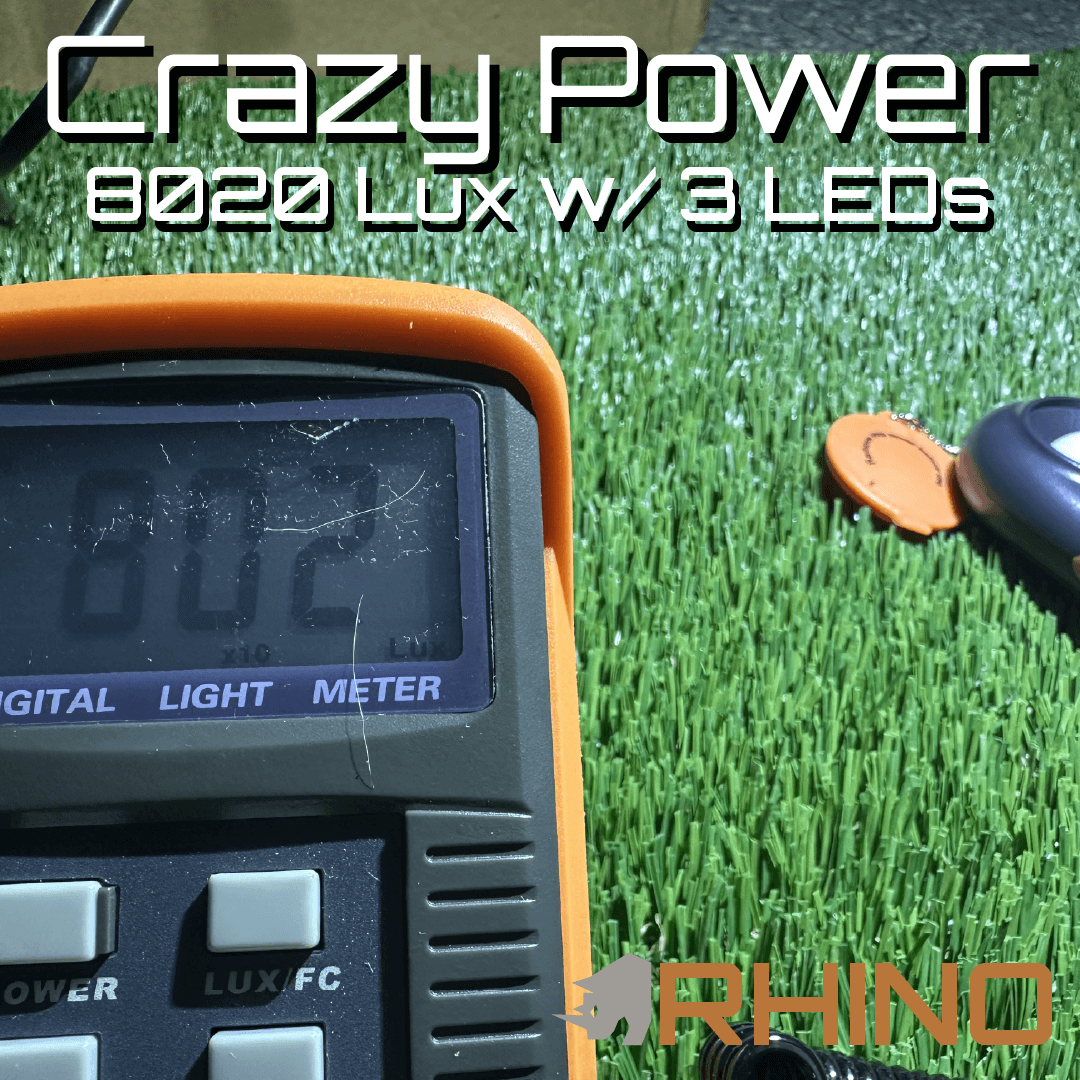
- Illuminance (measured): 8,020 lux at 13 in
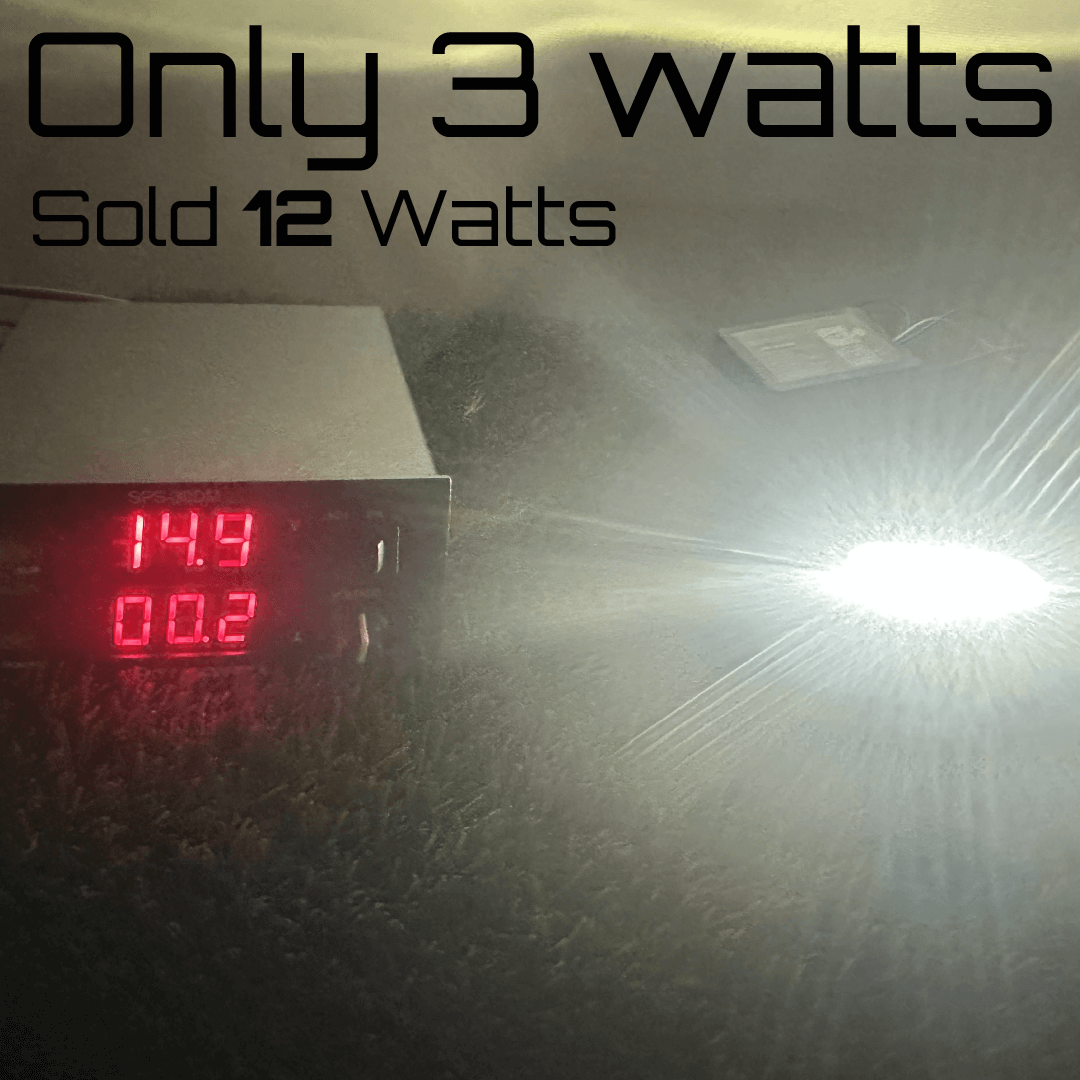
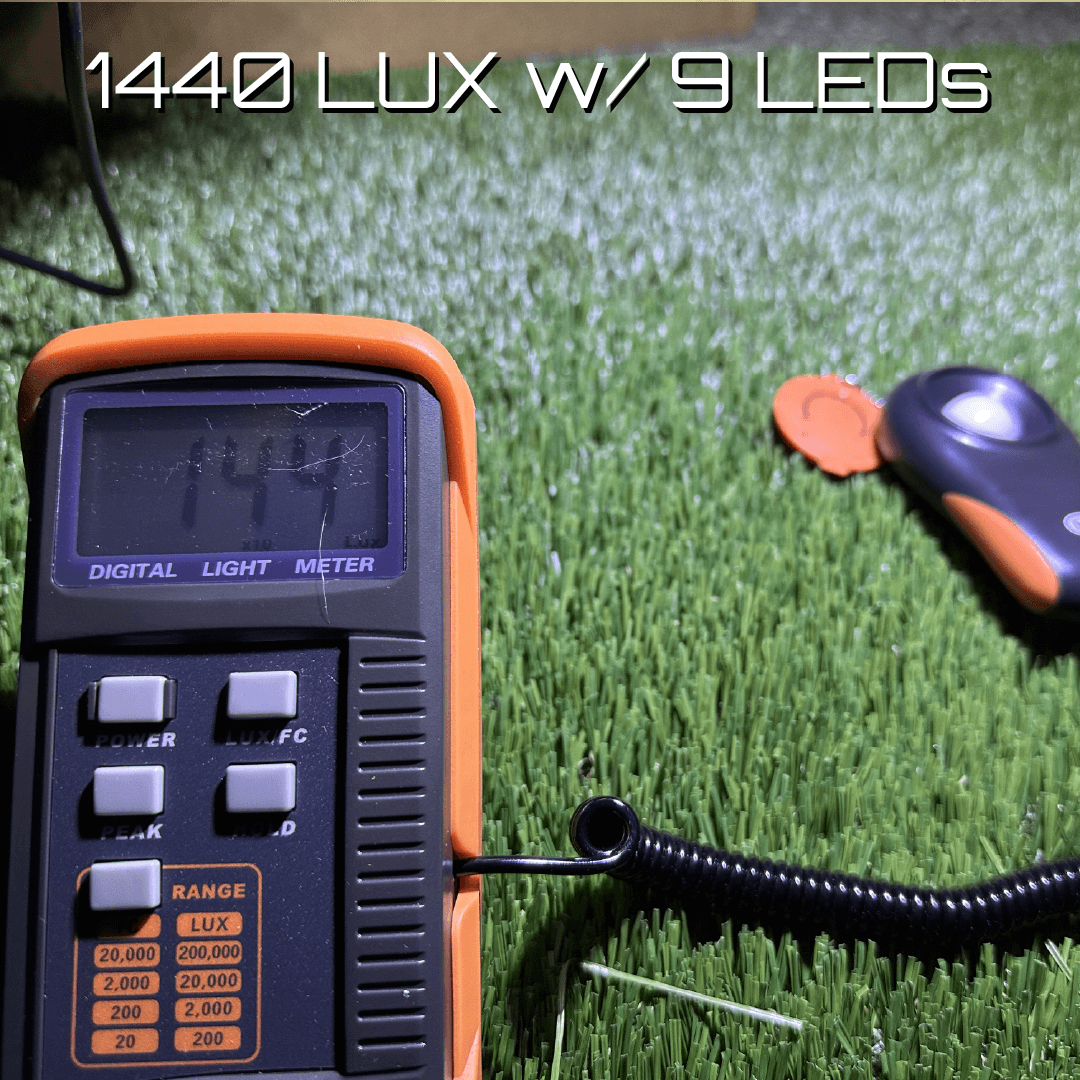
Sample marketed at 24 W
- Marked as: 24 W
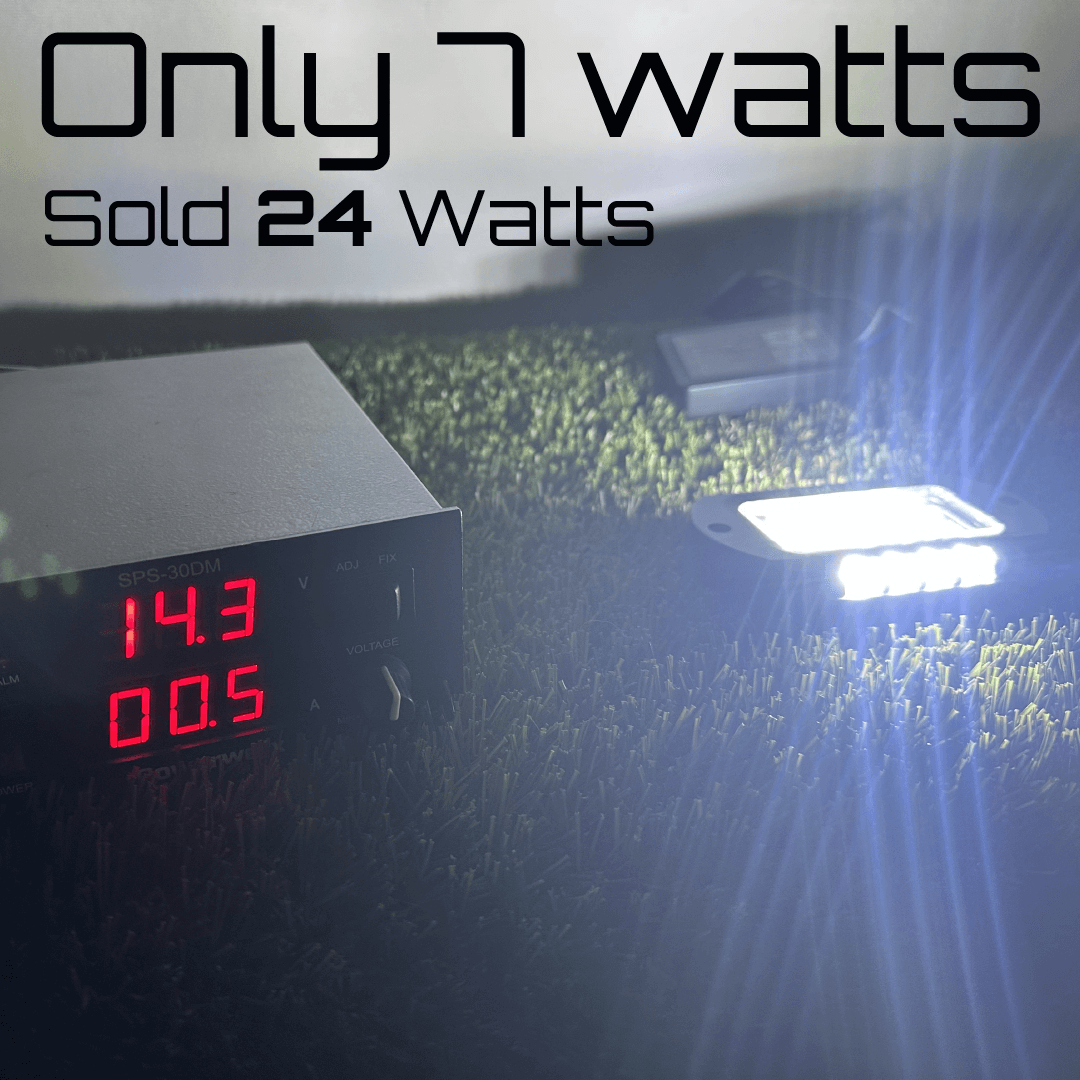
- Current draw (measured): 0.5 A
- Derived power at 14.3 V: approx. 7 W — 14.3 V × a measured 0.5 A
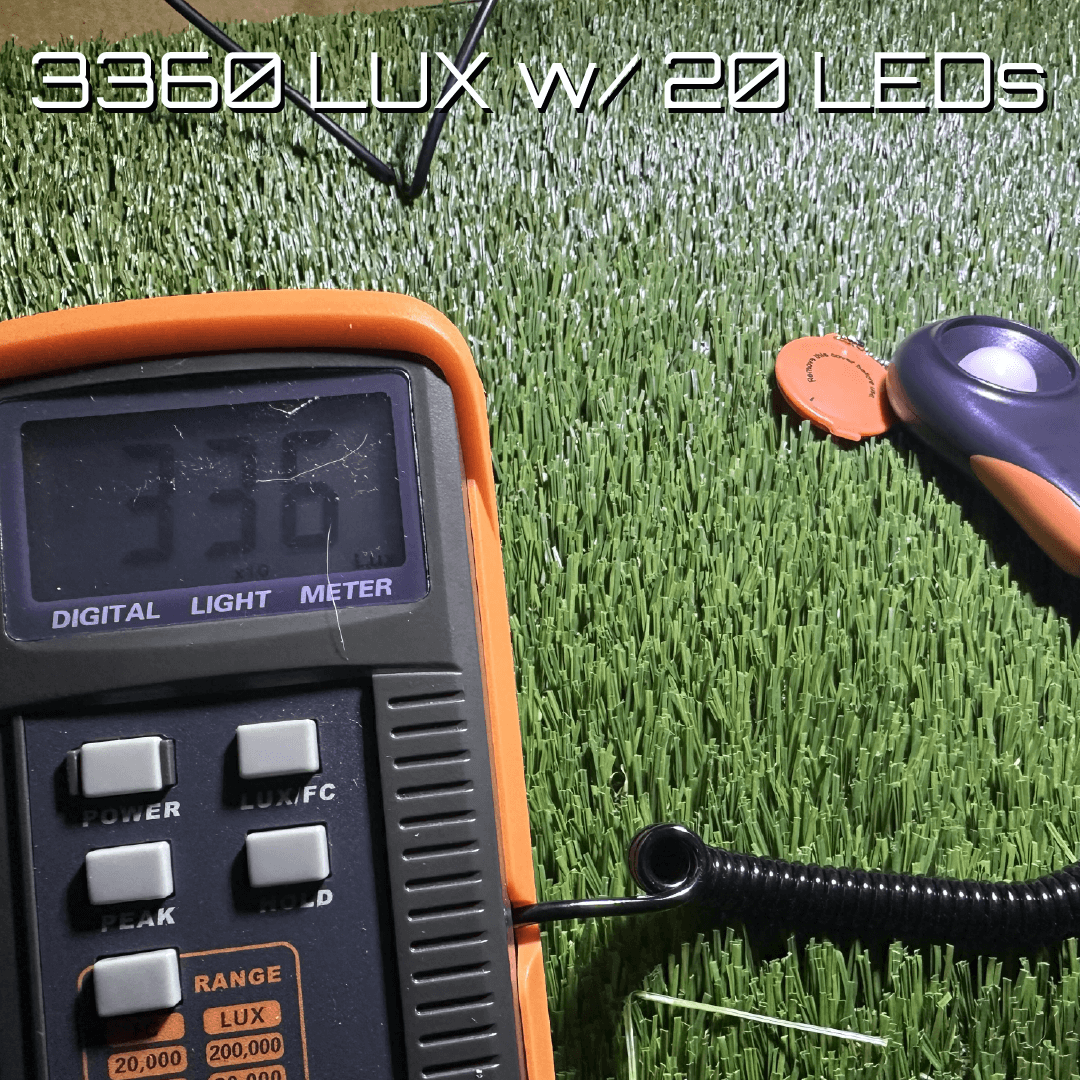
- Illuminance (measured): 1,837 lux at 13 in
Sample marketed at 12 W
- Marked as: 12 W
- Current draw (measured): 0.3 A
- Derived power at 14.3 V: approx. 4 W — 14.3 V × a measured 0.3 A
- Illuminance (measured): 825 lux at 13 in
The Visual Proof That Speaks Volumes
Every reading below was taken at 13 inches from the assembled light, on the same meter, at the same supply voltage. Lux measures illuminance at a surface — it is not a measure of total output, and it changes with distance and test geometry, which is why the distance is printed beside every figure.
Rhino Axion
Sample marketed at 24 W
Sample marketed at 12 W
Don't just see the trail. Light it.
High-output Cree RGBW emitters, a board we drew ourselves and firmware we wrote, in a housing machined and potted in North Carolina. This is Axion.
A series of 10 linked Axion lights displaying a dynamic, flowing pattern.
Watch It In Action:
What the bench showed
-
Illuminance: 8,020 lux at 13 in — 9.7× the sample marketed at 12 W, and 4.4× the sample marketed at 24 W, read at the same distance on the same meter. Those two samples are the ones we bought and tested, not a survey of the market.
-
Draw: approximately 20 W, and here is the arithmetic — 14.3 V × a measured 1.4 A. That is a derived figure, not a separate wattmeter reading, and we would rather say so. The supply reads current to 0.1 A, so it is 20 W, not the 20.02 W the multiplication implies.
-
Output, not LED count: high-output Cree RGBW emitters, engineered for usable light rather than for a number on a spec sheet. More emitters does not by itself mean more usable light.
-
Built in North Carolina: engineered, assembled, potted and tested in Huntersville — by the same people who service it. When a fault is found on the bench, it reaches the next board revision.
Ready to Experience the Difference?
A spec on a box isn't a test result. Start with four Axions and build to full-vehicle coverage.